Welcome to SUPERLEAD
For B2B buyers, industrial barcode scanner price is rarely determined by the scanner alone. It is usually influenced by the barcode type, reading difficulty, installation environment, communication interface, protection level, order quantity and technical support requirements. A scanner used for simple warehouse labels will not have the same cost structure as a scanner used for DPM codes on reflective metal parts or ultra-small codes on PCB components.
This is why buyers should not evaluate price only by comparing model names. A lower-priced device may work well for simple labels, but it may increase downtime if it cannot read difficult codes consistently. A higher-spec industrial scanner may cost more at the beginning, but it can reduce manual rework, improve traceability accuracy and support stable production.
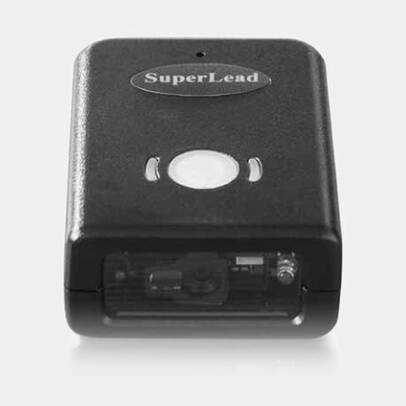
As a manufacturer of imaging reading solutions, SUPERLEAD provides different scanner series for industrial, logistics and commercial applications. Buyers can review its industrial bar code scanner solutions for more detailed product information.
The price of an industrial scanner varies because industrial applications are highly different from one another. Some customers only need to scan printed labels on cartons. Others need to read laser-marked DPM codes, tiny QR codes, curved packaging, reflective surfaces or fast-moving products on automated lines.
A simple application usually requires basic decoding performance and standard communication. A complex application may require higher image resolution, special lighting, stronger algorithm capability, durable housing, wider working temperature support or customized installation.
For this reason, the question should not be "What is the cheapest scanner?" Instead, buyers should ask, "What scanner can solve my reading problem with stable performance?" This approach helps avoid under-specification, which may lead to failed reads, production stoppage and additional replacement cost.
The type and quality of barcode directly affect scanner selection and price. If the barcode is large, clean and printed on a flat label, a basic industrial scanner may be enough. If the code is small, damaged, distorted or low-contrast, the scanner needs stronger imaging and decoding performance.
DPM reading often requires more advanced image processing and lighting. Since the code is directly marked on the object surface, there may be no clear black-and-white contrast. Metal parts, plastic components and electronic parts can all create different reflection and texture challenges.
Ultra-small codes also increase the technical requirement. In PCB, battery and precision manufacturing, space is limited, so the barcode may be very small. In this case, scanner resolution, focus capability and installation accuracy become more important.
Reflective or glossy surfaces can also affect price because stable reading may require optimized light control. If the scanner cannot reduce glare, the decoding rate may drop. Therefore, buyers should provide real code samples before asking for a quote.
Industrial barcode scanners are not all built with the same hardware. The image sensor, lens, light source, processor, housing material and interface configuration can all affect price.
Image sensor and lens: Higher reading accuracy and smaller code recognition may require better imaging components.
Lighting design: Difficult surfaces may need specific lighting structures to improve contrast and reduce reflection.
Housing durability: Industrial workshops may require stronger protection against dust, vibration or accidental impact.
Communication interface: Different projects may need USB, RS232, Ethernet or other connection methods depending on the system.
Installation accessories: Mounting brackets, cables and integration accessories may also affect total project cost.
When comparing industrial barcode scanner manufacturers, buyers should check whether the quoted price includes only the device or also includes cables, accessories, configuration support and technical guidance.
The purchase price of the scanner is only one part of the total cost. In automated production, integration cost can be just as important. A scanner must be installed at the correct position, adjusted to the right angle, connected to the right system and configured for the actual barcode.
If the scanner is used on a conveyor line, buyers should consider product speed, trigger method, reading distance and code position. If it is used with automated equipment, the communication interface and data output format must match the equipment control system.
In some cases, a slightly higher-grade scanner can reduce integration difficulty because it offers more stable decoding and better environmental adaptability. In other cases, a simpler model may be more cost-effective if the barcode is clean and the process is manual.
The best way to control total cost is to define the application clearly before purchase. Buyers should prepare code samples, product photos, reading distance, installation drawings and expected scanning speed when contacting suppliers.
Price comparison should not stop at the unit price. Buyers should also evaluate product quality, R&D capability, certifications, product range, project experience and after-sales support.
Reliable industrial barcode scanner manufacturers should be able to recommend suitable models according to actual working conditions. They should also explain why one model is more suitable than another, rather than simply offering the lowest price.
SUPERLEAD has developed multiple product series, including handheld imager series, fixed imager series, embedded imager series, desktop imager series, industrial imager series, wireless imager series and PDA products. The company has also gained patents and certifications such as RoHS, CE, FCC and ISO-related certifications.
For B2B buyers, this manufacturer background matters because barcode reading is often connected with production efficiency, quality traceability and long-term system stability. A reliable supplier can reduce selection risk and provide support when project conditions change.
When evaluating industrial barcode scanner price, buyers should not only ask for a number. They should first define the barcode type, material surface, reading distance, installation environment, system interface and production speed. These factors determine the right scanner configuration and the real cost of the project.
If you are comparing an industrial bar code reader for DPM codes, small codes, reflective surfaces or automated production lines, SUPERLEAD can help recommend a suitable model based on your application. Contact SUPERLEAD to share your project details and request a practical scanner selection suggestion.
 English
 中文
中文