Welcome to SUPERLEAD
Buying PDA barcode scanners is not only a hardware purchase. For many businesses, it is part of a larger data collection workflow involving inventory management, logistics tracking, retail operations, warehouse control or light industrial production. If buyers do not define their application clearly before purchase, they may choose a device that looks suitable on paper but fails to match real daily work.
A PDA Android barcode scanner combines barcode reading, Android-based operation, wireless connection and mobile data processing. To select the right model, buyers should prepare key project information before contacting a supplier. This helps manufacturers recommend a more suitable device and reduces the risk of wrong selection.
As a barcode reading solution provider, SUPERLEAD supports different business and industrial applications with handheld, fixed, wireless, embedded, industrial and PDA scanner series.
The first step is to define what type of barcode the device needs to read. Some businesses scan standard 1D barcodes on labels. Others need to scan 2D codes, QR codes, product codes, carton labels or labels with lower print quality.
Working distance is also important. A device used for close-range shelf scanning may not require the same configuration as a device used for large cartons, pallets or logistics sorting. If workers need to scan at different distances, this should be explained before model selection.
Usage frequency affects device requirements as well. A team that scans occasionally does not have the same needs as a warehouse team scanning all day. High-frequency scanning requires better ergonomics, stable battery performance, reliable barcode reading and durable hardware.
Before requesting a quote, buyers should prepare barcode samples, common scanning distances and estimated daily scanning volume. This information helps suppliers recommend the right PDA scanner instead of only suggesting a general model.
Connectivity is a major reason businesses choose PDA devices instead of basic scanners. A PDA Android barcode scanner can support business applications while transmitting data through wireless networks.
Android is useful when the company needs to run warehouse management apps, logistics apps, retail inventory apps or customized mobile software. It allows the device to work as a smart terminal rather than only a barcode reader.
WiFi is important for warehouses, stores and factories with internal network coverage. It allows scanned data to be uploaded to the system in real time. 4G is useful for logistics, outdoor operations, field service or mobile teams that work outside WiFi areas. Bluetooth can support connection with other devices, accessories or local systems.
Before buying PDA barcode scanners, buyers should confirm where the device will be used and what network is available. This prevents communication problems after deployment.
Daily working conditions have a direct impact on PDA scanner selection. A device used in a clean office is different from one used in a warehouse, delivery station or light industrial site.
Battery design should be evaluated carefully. For long shifts, replaceable battery design can reduce downtime. If workers cannot stop and charge the device during busy hours, battery flexibility becomes important.
Memory and storage also matter when the device needs to run business applications, store data temporarily or process larger task lists. A PDA device with sufficient memory can support smoother operation.
Protection level should match the operating environment. Warehouses and logistics sites may involve dust, frequent handling and accidental drops. Light industrial sites may require stronger durability. A rugged PDA scanner helps reduce replacement costs and work interruption.
Buyers should describe their working environment clearly, including indoor or outdoor use, dust level, working hours, handling frequency and possible impact risks.
Some businesses only need one PDA model for all users. Others may need different device types for different departments. For example, warehouse staff may need rugged PDA devices for receiving and stocktaking, while retail staff may need lighter terminals for inventory and shelf management.
If one device must support multiple workflows, buyers should list all major use cases before selection. A model suitable for simple inventory checks may not be ideal for heavy logistics scanning. A device suitable for warehouse workers may be too large for customer-facing store use.
The number of users also matters. A small team may focus on basic functions and cost control. A larger team may care more about device consistency, software deployment, training, maintenance and long-term supply.
When buying PDA barcode scanners for multiple departments, it is better to plan the full workflow first, then choose the device configuration.
A reliable supplier should do more than send a price list. For B2B projects, model selection should be based on barcode type, application scenario, network environment, software needs and daily workload.
SUPERLEAD has focused on two-dimensional code and vision detection equipment for many years. Its product portfolio includes multiple scanner series, allowing buyers to choose from handheld, fixed, embedded, desktop, wireless, industrial and PDA solutions.
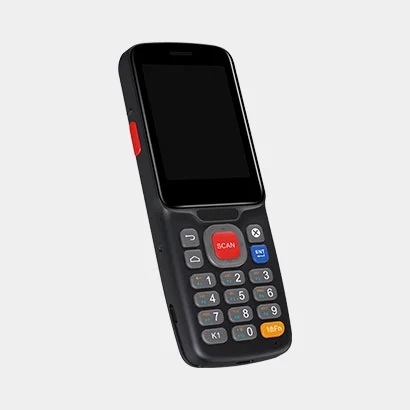
For PDA applications, SUPERLEAD provides PDA Android barcode scanner devices for warehouse management, logistics express delivery, retail operations and light industrial environments. These devices are designed to combine scanning performance, mobile operation and wireless communication.
Working with a manufacturer that understands multiple barcode reading scenarios can help buyers reduce selection risk. Instead of choosing a device based only on price, businesses can receive a more practical recommendation based on actual workflow.
Before buying PDA barcode scanners, buyers should prepare more than a purchase quantity. They should define the barcode type, scanning distance, usage frequency, network environment, software requirements, battery expectations and working conditions. This information helps suppliers recommend the right device and helps businesses avoid costly mismatches.
If you are planning to purchase a PDA scanner for warehouse, logistics, retail or light industrial use, SUPERLEAD can help evaluate your application and suggest a suitable model. Contact SUPERLEAD to share your project requirements and receive practical selection support.
 English
 中文
中文