Welcome to SUPERLEAD
In modern manufacturing and logistics operations, barcode reading is no longer just a simple identification step. It has become a key part of production traceability, quality inspection, warehouse management and automated data collection. A reliable industrial bar code reader helps factories capture accurate information from products, components, packaging and moving materials, even when the code is small, low-contrast, reflective or directly marked on a difficult surface.
Unlike ordinary retail scanners, industrial barcode reading devices must work in harsher environments, integrate with production systems and support stable decoding under different lighting, speed and installation conditions. For buyers, choosing the right scanner is not only about reading distance or price. It is about matching the device to the real workflow.
SUPERLEAD develops imaging code reading solutions for industrial, logistics, self-service and commercial applications. Its industrial imager solutions are designed for DPM codes, ultra-small barcodes, reflective surfaces and demanding production environments.
An industrial bar code reader is a barcode reading device designed for production lines, automated equipment, warehouse operations and traceability systems. It captures and decodes 1D or 2D barcodes from labels, product surfaces, packaging, components or directly marked materials.
The main difference between an industrial scanner and a general-purpose scanner is application reliability. In a factory, barcodes may be printed on curved packaging, etched on metal, marked on plastic, placed on fast-moving products or exposed to dust, vibration and temperature changes. A standard scanner may work in clean retail conditions, but it may fail when code quality is unstable or the installation environment is complex.
A suitable industrial bar code scanner should provide stable decoding, durable housing, proper lighting, flexible communication options and compatibility with the buyer's production or data system. For automated lines, fixed-mount readers are often used. For warehouse, maintenance or inspection tasks, handheld or wireless industrial scanners may be more practical.
Industrial barcode reading is often challenging because the code itself and the working environment are not always ideal. Before choosing a scanner, buyers should first understand what makes the code difficult to read.
DPM codes are common in electronics, metal parts, plastic components and precision manufacturing. These codes are engraved, etched or printed directly on the product surface, which often makes contrast lower than a normal printed label.
Ultra-small barcodes are another common challenge. In PCB, battery and compact component manufacturing, available marking space is limited. The scanner must support high-resolution image capture and stable focusing.
Reflective surfaces can also reduce reading stability. Bright metal, glossy plastic and reflective packaging may create glare. An industrial reader with suitable lighting design can improve code capture on these surfaces.
Fast-moving products require a scanner that can decode within a short time window. On conveyor lines or automated stations, stable reading speed is just as important as barcode compatibility.
Harsh operating conditions, such as dust, vibration, limited installation space and changing light conditions, also affect scanner selection. This is why industrial-grade design matters.
The best scanner is not always the most expensive model. The right choice depends on how the scanner will be used. Buyers should evaluate the barcode type, reading distance, installation position, moving speed, lighting condition and system connection before selecting a model.
For automated production lines, a fixed industrial reader is usually installed near conveyors, assembly stations, inspection points or packaging equipment. It can automatically read codes without manual operation. This is suitable for 3C electronics manufacturing, PCB production, battery manufacturing, food and beverage packaging, pharmaceutical packaging and other continuous processes.
For manual operations, such as warehouse receiving, component inspection or repair tracking, a handheld or wireless scanner may offer better flexibility. Operators can move around the workspace and scan codes on products, cartons, shelves or equipment.
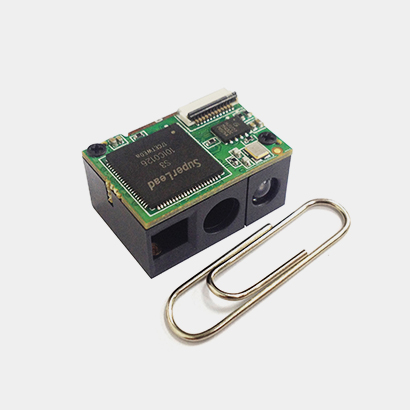
For compact equipment, installation space becomes a key factor. A smaller industrial reader may be needed when the scanner must be embedded into machines, inspection systems or robotic workstations. In this case, buyers should consider scanner size, cable direction, mounting method and communication interface.
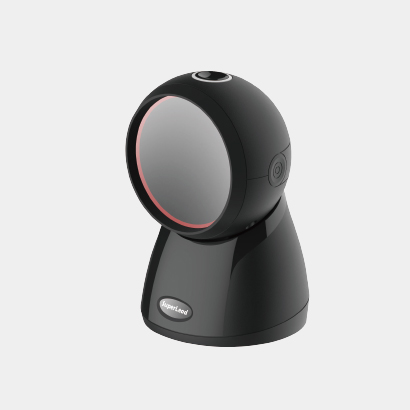
Different workflows require different scanner types. A fixed scanner is suitable for automatic reading points where the product moves through a stable position. It helps reduce manual operation and supports continuous data collection in production lines.
A handheld scanner is better for flexible scanning tasks. It is commonly used when products are stored in different locations, when workers need to scan multiple positions, or when barcodes are not always presented in the same orientation.
A wireless scanner is useful for larger work areas, warehouses and logistics environments where cable movement may limit efficiency. It allows operators to move more freely while still collecting barcode information.
For buyers comparing scanner types, the key question is not simply "which scanner is better?" The better question is "which scanner fits the process?" A good selection should consider code type, working distance, scan frequency, installation environment, operator behavior and future system expansion.
Choosing the right product is important, but choosing the right manufacturer is also critical. Reliable industrial barcode scanner manufacturers should provide not only hardware, but also application understanding, stable product quality and technical support.
When evaluating manufacturers, buyers can focus on several factors.
Product range matters because one production site may need fixed readers, handheld scanners, embedded readers and wireless scanners in different areas. A manufacturer with a complete product portfolio can support more application scenarios.
R&D capability is also important. Industrial barcode reading often involves difficult codes, special lighting, compact installation and system integration. Strong R&D capability helps solve real project problems.
Certifications can help buyers evaluate compliance and quality management. For industrial projects, product reliability, production consistency and long-term supply stability are all important.
Application experience is another key factor. Experience in electronics, logistics, manufacturing, payment, self-service equipment and industrial automation can make model selection more accurate.
SUPERLEAD has focused on two-dimensional code and vision detection equipment for many years. With multiple product series, patent achievements and international certifications, SUPERLEAD provides barcode reading solutions for different industrial and commercial fields.
A reliable industrial bar code reader should be selected according to the real barcode, material surface, installation space, reading distance, product speed and system connection. Instead of choosing only by general specifications, buyers should first define the actual reading challenge.
If your project involves DPM codes, ultra-small barcodes, reflective surfaces, automated production lines or industrial traceability, SUPERLEAD can help you evaluate the right industrial bar code scanner for your application. Contact SUPERLEAD to share your code type, working distance and operating environment for model selection support.
This is the first one.
 English
 中文
中文